Federal Hill Rooftop Deck Homes: A Buyer’s Guide
July 16, 2026
July 16, 2026
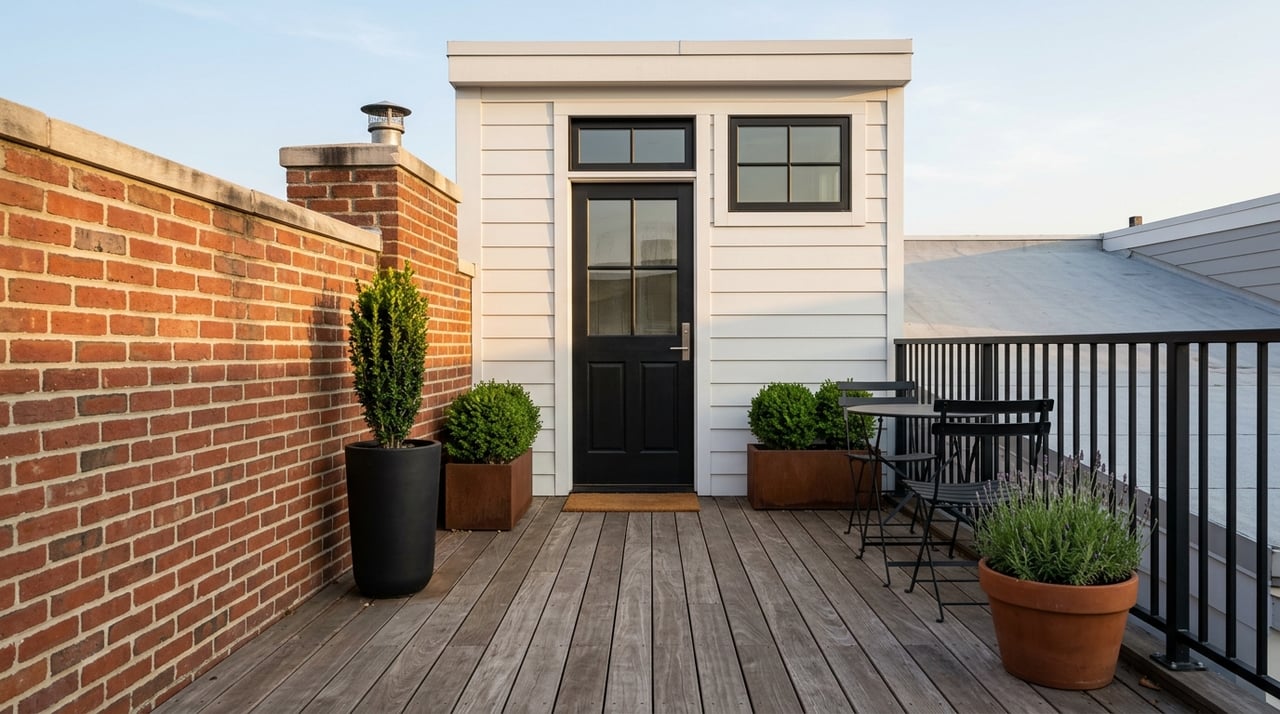
If you are house hunting in Federal Hill, a rooftop deck can look like the feature that seals the deal. In a neighborhood known for brick rowhomes, harbor views, and a dense urban layout, that extra outdoor space can feel like a major lifestyle upgrade. Still, not every rooftop deck offers the same value, and in Federal Hill the details matter. Let’s dive in.
Federal Hill is a view-driven neighborhood with historic rowhomes, active streets, and close access to the Inner Harbor. In that setting, a rooftop deck is often more than a nice bonus. It can serve as usable outdoor living space in a part of Baltimore where private yard space is often limited.
That appeal is tied closely to the neighborhood itself. Federal Hill Park is known for skyline views, and many homes nearby benefit from the same view-oriented character. For buyers, that means a rooftop deck may add daily enjoyment, but it should also be evaluated as a structural and legal improvement.
Federal Hill is not just a popular rowhouse market. It also has an important preservation framework that affects exterior changes.
Baltimore created the Federal Hill Local Historic District in 2017, and the area has long been recognized in Maryland's National Register records. If a home is within the local historic district, a rooftop deck is usually reviewed not only for building code compliance, but also through a preservation process.
That distinction matters when you compare properties. Two homes may both advertise rooftop decks, but one may have completed approvals and a design that fits neighborhood rules, while the other may come with unanswered questions.
In Baltimore, a permit is required to build a rooftop deck. The city also makes clear that permits help protect safety, health, property value, and future resale by showing that work was completed properly.
Even if a contractor handled the project, the property owner is responsible for obtaining the permit. For a buyer, that means you should not assume a deck is legal or fully approved just because it exists or looks professionally built.
If the home is in the Federal Hill Local Historic District, the process is more involved. Exterior alterations require review, and CHAP approval must be secured before the building permit is issued through an Authorization-To-Proceed.
Baltimore expects rooftop deck plans to be detailed. Construction documents must show setbacks and be signed and sealed by a Maryland-licensed architect or engineer.
For one- and two-family homes, the city also requires a scaled site plan. Deck drawings should show the extension of the deck, height limits, and side elevation.
If the deck relies on party walls for support, adjoining owners must be notified in writing, and that notice must be included with the plans. In a Federal Hill rowhouse setting, that is an especially important detail because homes are closely attached.
A rooftop deck is not treated like a cosmetic add-on. Baltimore considers it a structural rooftop feature, which means design and placement rules can affect whether a deck is compliant.
Some of the most important requirements involve setbacks from the front of the home. The city requires minimum front setbacks of 8 feet on flat roofs, 6 feet behind the ridge on gabled roofs, and 10 feet from the front facade on rowhouses facing streets 30 feet wide or less.
The city’s design guidance also says roof decks for rowhouses are design-review items and should not be visible from the street-front grade along a primary elevation. Whenever possible, access should come from the rear instead of a rooftop pop-up or doghouse.
For buyers, this helps explain why some Federal Hill decks feel more discreet and integrated while others may raise red flags. A bulky street-facing structure or a highly visible rooftop addition can create approval issues and affect future resale conversations.
Baltimore treats rooftop decks as permitted appurtenances, so they do not count against zoning height limits. However, roof access structures still cannot exceed the district height limit.
The city’s design guidance also discourages permanent rooftop features such as pergolas, arbors, outdoor kitchen units, or hot tubs when they are visible from the public right-of-way across the street. In a historic rowhouse neighborhood, that can shape what is realistic from both a design and approval standpoint.
So when you hear "rooftop deck potential," it is smart to think beyond the platform itself. The real question is whether the home supports the kind of rooftop setup you want within Federal Hill’s rules.
During a showing, it helps to look past the view for a moment and focus on the basics. Baltimore requires guards on open sides that do not allow a 4-inch sphere to pass through intermediate rails or ornamental closures, and ladder-effect horizontal rails are not allowed.
Fencing around a roof deck should not exceed 42 inches in height. The deck must also have at least one GFCI receptacle, and overhead electrical conductors need at least 8 feet of clearance above the deck surface.
You do not need to become a code expert at a showing. You just want to notice whether the guard system feels solid, whether openings look oversized, and whether the overall installation appears carefully executed.
One of the biggest long-term issues with rooftop decks is not always obvious on day one. CHAP’s preservation guidance warns that roof leaks can damage hidden roof and wall components for years before the problem becomes visible.
That is why roof membrane age, drainage, and signs of water intrusion deserve close attention. Staining on ceilings, patched areas below the deck, or vague answers about waterproofing history can all signal a deeper maintenance issue.
Annual roof inspection is recommended, which gives buyers a useful benchmark. A well-maintained deck can be a real asset, but deferred roof care can turn a great feature into an expensive project.
If you are serious about a Federal Hill home with a rooftop deck, paperwork matters. Ask for the permit file, stamped plans, and proof of final inspection or permit closeout.
If the home is in the local historic district, also ask for the CHAP Authorization-To-Proceed. These records can help confirm that the deck was reviewed, built, and signed off through the proper process.
Baltimore’s inspection guidance says deck permits require footing and final inspections, and work must remain open and accessible until approved. Work completed without a permit can trigger penalties and may even require removal if it is not code-compliant.
When you tour a home with a rooftop deck, keep your questions practical. A few focused questions can tell you much more than the listing description.
Ask about:
These questions help you separate a true asset from a feature that may need negotiation, repairs, or further review.
In Federal Hill, a legal and well-maintained rooftop deck is often a stronger marketing asset than an unpermitted or poorly documented one. The neighborhood’s rowhouse layout and skyline views make outdoor roof space especially appealing, but buyers also tend to notice missing paperwork, visible wear, or awkward rooftop additions.
That can affect value in practical ways. A compliant deck with clean documentation may support smoother marketing and stronger buyer confidence, while unresolved permit issues or visible maintenance concerns can create hesitation during inspections and negotiations.
This is where local guidance matters. In a historic Baltimore neighborhood, the best evaluation is rarely just "Does the home have a rooftop deck?" It is "How well was it planned, approved, and maintained?"
Rooftop decks can absolutely elevate a Federal Hill home. They add functional outdoor space in a dense rowhouse setting and can make the most of the neighborhood’s view-oriented appeal.
At the same time, the best rooftop decks are the ones backed by solid approvals, thoughtful design, and ongoing maintenance. If you are buying or preparing to sell in Federal Hill, careful review of permits, visibility, structure, and roof condition can protect both your investment and your peace of mind.
If you want help evaluating a Federal Hill home with rooftop deck potential, or positioning one for sale with the right local strategy, connect with Elise Brennan for knowledgeable, neighborhood-focused guidance.
Experience unmatched dedication, market expertise, and a personalized approach to buying or selling your home. Since 2012, she has built a trusted reputation in the Baltimore metro area, forging strong community connections and delivering proven results. Whether you’re a buyer or seller, She combines strategic insight, local knowledge, and exceptional service to achieve your real estate goals.