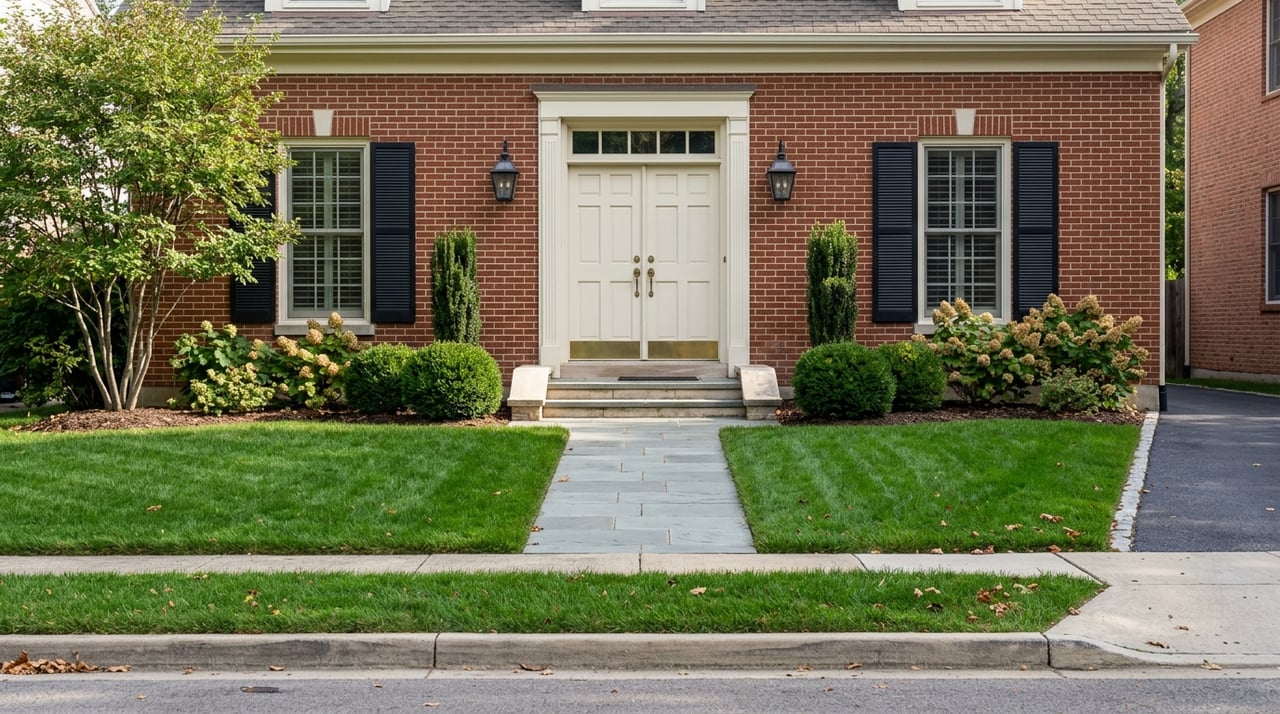
How To Choose The Right Towson Neighborhood Fit
June 11, 2026
June 11, 2026
Wondering how to choose the right Towson neighborhood fit? That question matters more than many buyers expect, because Towson is not just one uniform place. It is a mix of distinct pockets with different housing types, street patterns, commute routes, and daily rhythms. If you know what to compare before you start touring, you can narrow your search faster and make a more confident move. Let’s dive in.
Towson is the county seat of Baltimore County and Maryland planning materials describe it as the county’s urban center. It is also shaped by major institutions, including Towson University and Goucher College, which adds to the variety you feel from one area to the next.
That variety shows up in the housing stock too. Maryland planning’s 2020 to 2024 ACS profile reports 24,871 total housing units in Towson CDP, including 33.7% one-unit detached homes, 21.7% one-unit attached homes, and 22.3% in structures with 20 or more units. The same profile shows 55.4% owner-occupied and 44.6% renter-occupied housing, so buyers often see a wide mix of rowhomes, single-family homes, and larger multifamily buildings.
The best Towson neighborhood for you usually depends less on reputation and more on how you actually live. Before you focus on finishes or square footage, it helps to think about what will shape your day-to-day routine.
A practical Towson search often narrows fastest when you rank four variables:
When you lead with those factors, the search becomes clearer. Instead of asking which neighborhood is "best," you can ask which pocket fits your schedule, housing goals, and comfort level.
If housing style is your top priority, Towson gives you several very different options. Some buyers want a walkable rowhome setting, while others want a tucked-away residential feel or easy access to larger buildings and central amenities.
Buyers who want brick rowhomes, sidewalks, and a strong neighborhood identity often begin with Rodgers Forge. The Rodgers Forge Community Association describes the neighborhood as nearly 1,800 households, with most homes being brick rowhomes built between the 1930s and 1950s.
Stoneleigh and Anneslie also come up often for buyers who like established residential character. Anneslie’s community association says it includes about 500 homes on six streets and was added to the National Register of Historic Places in 2012. Stoneleigh’s community association highlights preservation and community interests, and National Register documentation places the Stoneleigh Historic District south of Towson near York Road and Regester Avenue.
If you want a residential setting while staying close to Towson’s core, West Towson and Southland Hills are worth comparing. Southland Hills says it has about 200 homes and is within walking distance of downtown Towson, the Towson YMCA, and Towson University.
West Towson also appeals to buyers who want that balance of residential feel and central convenience. Its neighborhood association focuses on issues like zoning, traffic, parking, parks, and public facilities, which signals an active local civic culture.
Some buyers want Towson access without feeling in the middle of the busiest areas. Towson Estates is one example of that search profile. Baltimore County design guidelines describe it as a community of charming homes with no through streets and a preservation focus.
Historic East Towson can also appeal to buyers looking for a more distinct setting shaped by history and a close-knit footprint. The neighborhood association says it was founded in 1829 by manumitted slaves of the Hampton Estate and still occupies a six-block area beside Towson Mall and the Towson Library.
If your goal is convenience first, central or downtown Towson may rise to the top. Towson University describes the surrounding area as a college town with restaurants, bookstores, movies, shopping, and other services within walking distance.
The Baltimore County Public Library Towson Branch at 320 York Road adds another layer of daily convenience with study rooms, public computers, WiFi, meeting rooms, and passport services. County government functions are centered here too, which contributes to the busier feel of the core.
In Towson, convenience often comes down to road access. The routes that matter most for your work, school, or regular errands can have a big effect on which pocket feels easiest to live in.
Towson University’s directions emphasize access from I-695 via Charles Street, while Goucher College notes access near I-695 exit 27A via North Charles Street or York Road. Towson High School directions also use I-695 and York Road. In practical terms, York Road, Charles Street, Dulaney Valley Road, and the Beltway are major corridors that often shape everyday travel.
If transit matters to you, Towson has meaningful bus coverage as well. MDOT MTA lists CityLink GREEN, CityLink RED, Route 51, Route 93, Route 103, and Route 36 among local services connected to Towson. Towson University also notes multiple MTA bus stops on or near campus, plus shuttle service to apartment complexes, Timonium Park and Ride, and Baltimore Penn Station.
Two homes may be only a short drive apart but feel completely different in daily use. That is why buyers should compare not just the house, but also how easy it is to get to the places you expect to use often.
If you want restaurants, shopping, library services, and a more active public environment close by, central Towson often makes sense. If you want a more residential setting with community identity and local association activity, neighborhoods like Rodgers Forge, Stoneleigh, Anneslie, West Towson, and Southland Hills may be a better fit.
This is especially important for relocation buyers. If you are moving to the Towson area for a university, hospital, or other professional role, choosing a neighborhood based on your real routine can save time and reduce stress once you move in.
School zoning is one area where it is smart to slow down and verify details directly. In Towson, neighborhood reputation alone is not enough.
Baltimore County Public Schools provides system boundary maps and a school zoning tool. BCPS also reports that a central-area boundary change process was approved on April 21, 2026 for implementation in the 2026 to 2027 school year. That means buyers should confirm the current assignment for any specific address before relying on assumptions.
A good rule is simple: treat school zoning as an address-level due diligence step. It is more reliable to verify the official map than to rely on word of mouth.
If you are feeling overwhelmed by options, use a short comparison process. This works especially well in Towson because the area includes several overlapping micro-markets rather than one single neighborhood experience.
Start by listing your top three must-haves. You might care most about a detached home, walkability to errands, a shorter Beltway commute, or a neighborhood with a strong association presence.
Keep the list short. When everything feels important, it becomes harder to compare neighborhoods clearly.
Once you know your priorities, create a simple first-pass list:
This helps you avoid spending time in areas that do not match your goals.
Before you get attached to a property, look at the roads you would use most often. In Towson, York Road, Charles Street, Dulaney Valley Road, and I-695 can shape the day more than the map suggests.
If possible, visit at the times you would normally travel. A neighborhood can feel very different during campus activity or peak traffic periods.
Once you narrow your list, verify practical items for the exact address. That includes school zoning, nearby transit options, and how the home’s location lines up with your regular errands.
This final step is often what separates a home that looks right on paper from one that truly fits your lifestyle.
The biggest mistake buyers make in Towson is treating it like one market. It is better understood as several connected but distinct micro-markets, each with its own mix of housing form, pace, and convenience.
That is why a personalized approach matters. A buyer who wants walkable access to restaurants and library services may end up happiest in central Towson, while someone looking for a traditional residential setting may focus first on West Towson, Southland Hills, Historic East Towson, or Towson Estates.
When you match the right pocket to the way you live, the search becomes more efficient and the final decision usually feels much clearer.
If you are planning a move in Towson and want help comparing neighborhoods with a local, practical lens, Elise Brennan can help you narrow the options and move forward with confidence.
Experience unmatched dedication, market expertise, and a personalized approach to buying or selling your home. Since 2012, she has built a trusted reputation in the Baltimore metro area, forging strong community connections and delivering proven results. Whether you’re a buyer or seller, She combines strategic insight, local knowledge, and exceptional service to achieve your real estate goals.